





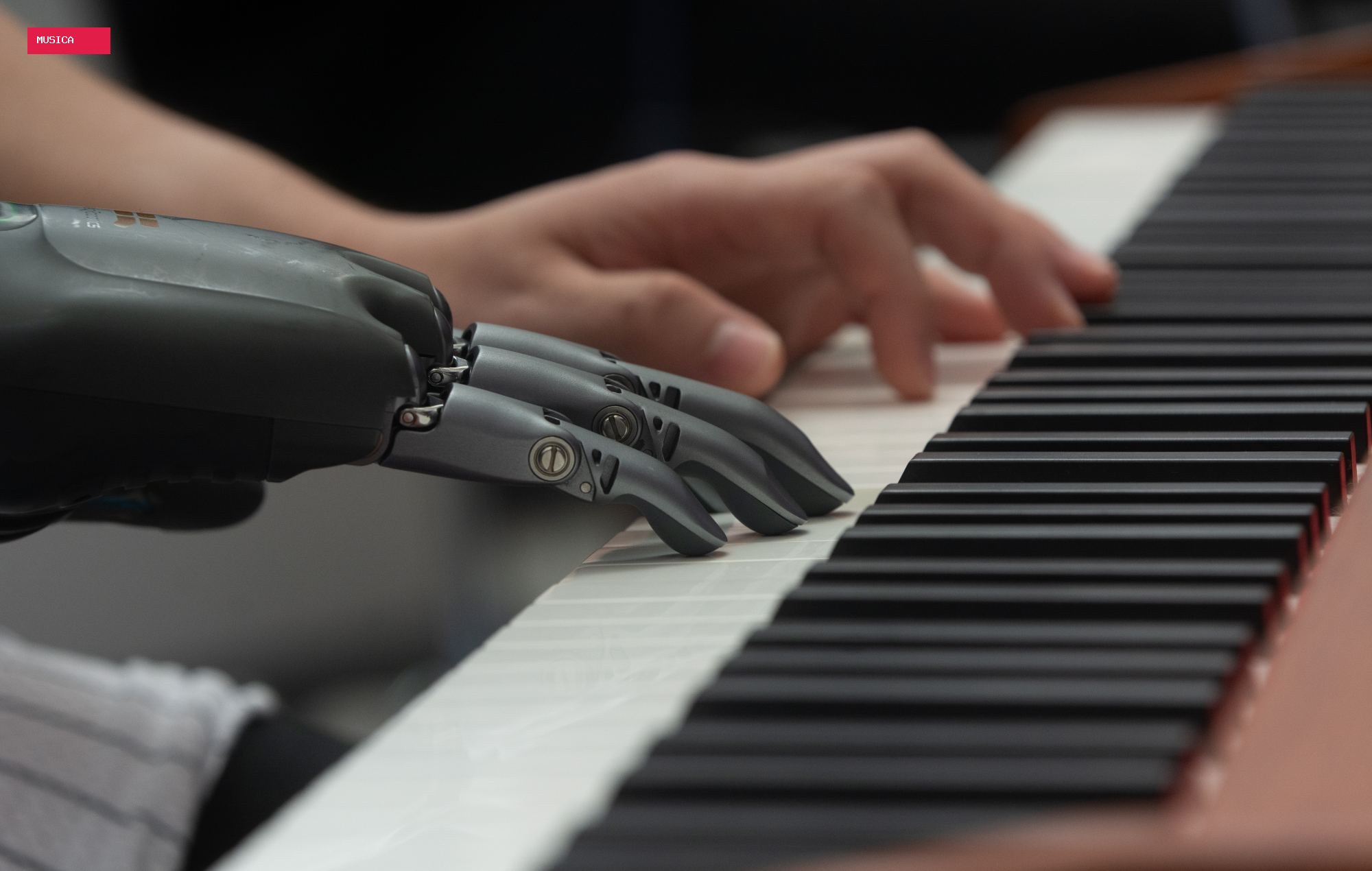
As the conversation around the impact of AI on music and creatives grows ever louder, industry leaders have laid out what needs to be done to protect artists and the UK’s creative forces in the future.
- READ MORE: NME’s top 10 shows from Beyond The Music 2026.
- Attribution and equity: “Ensuring proper human credit and economic compensation for artists and creators whose work influences or feeds into AI-generated output.”.
- K-pop girl group ILLIT are wearing their hearts on their sleeves.
Licenciamento e consentimento: “Estabelecer condições mínimas e estruturas claras para quando e como obras criadas por humanos podem ser usadas para treinar modelos de IA generativa.”.
Queens Of The Stone Age: “O objetivo da música para nós é ser capaz de tocar coisas que são difíceis de dizer”.
O livro de mesa de café “NME The Cover 2025-2026” já está à venda – não perca o desconto de lançamento.
This month saw a gathering of industry leaders, artists and experts at Manchester’s Beyond The Music Festival, where an AI summit was held come up with a set of principles based on the idea that “art is a human right” and that creators naturally have a moral and material claim to be both credited and paid for their work.
The ‘Manchester Principles’ were designed as a first-of-its-kind industry-wide plan and rights-based roadmap to align creators, rights-holders, tech platforms, AI labs and policymakers on generative AI regulations.
Os principais objetivos dos ‘Manchester Principles’ acordados pelo grupo de trabalho foram.
Durante um dia que delineou as potenciais oportunidades e ameaças da IA, a conferência ouviu que estamos “nos primeiros cinco minutos da próxima revolução industrial” e que modelos soberanos baseados e de propriedade do Reino Unido poderiam aproveitar o conhecimento do país, recompensar nossos criadores e liderar o caminho internacionalmente para que a IA seja adotada de forma justa e moral.
Introducing the talks, Ian Murray MP, Minister for Creative Industries, said that this was a sensitive area given that “66 per cent of music creators believe AI poses a direct threat”.
He added that “we cannot ask our creators to choose between embracing innovation and protecting their rights,” while we should simultaneously be working towards the UK becoming “the safest place to develop and adopt AI technology in the world”.
Clive Dickens, who founded Absolute Radio and is now founder and CEO of The Meliora Company, is helping companies and creative outlets to adapt to the ever-enveloping world of AI.
Speaking at Beyond The Music, Dickens argued that “the UK must own more than the playlist” when it comes to AI and music.
Dickens disse que a indústria e o governo do Reino Unido precisavam acelerar o ritmo quando se tratava de questões de “regulação, confiança e guardrails”, sugerindo que adotassem o conceito da Meliora ou reimaginem o termo ‘GPT’ (Generative Pre-trained Transformer) como ‘Fair GPT’ – significando que os modelos futuros seriam governados de forma justa, alimentados de forma justa e treinados de forma justa.
For the ‘fair powered’ ideal, Dickens said that more should be done to use renewable forms of energy to power data centres. As for ‘fair training’, he called for work to not be scraped or stolen, with provenance, consent and remuneration of sources mandatory.
He added that with a sovereign model of its own, the UK could lead the way in future-proof AI use that’s good for humanity and protects creatives.
Giving said model the hypothetical name ‘Hope V. 1’, Dickens argued that it could also be trained on the UK’s vast wealth of non-digitised knowledge, and set for the challenge for it to be created by November 2027 when Manchester hosts the next G20 summit.
He ended by imagining “a model that is fair governed, fair powered and fair trained, where creators get paid off the back of the creative economy, allowing everyone who contributes to that economy to generate income from.”.
Dickens added: “We can go one step further and have our own sovereign model, then once we have our own electricity, we can control how that creative culture is exported in our country and across the world.”.
Fora desses modelos, a tecnologia está sendo desenvolvida para devolver o poder às mãos de artistas e criadores. Além de atuar como Diretor Técnico da Massive Attack em suas ambiciosas produções ao vivo e iniciativas ecológicas, Andrew Melchior também é CEO da Genotone.
His company are working on technology that will one day prove the human origin and authorship of all recorded music.
Speaking on a panel at Beyond The Music, Melchoir said that the industry urgently needed to provide “clarity, standards and standardised tools that avoid bespoke walled gardens”.
Genotone are working on “inaudible provenance markers” and watermarks inside all audio files, so that all music can either be told apart from AI-slop or that the creators behind the original source can be traced.
The same panel saw UK Music CEO Tom Kiehl explain how issues around “mass-scraping, consent, deep-fakes and AI slop were “huge” for the industry, and “deeply personal to artists”.
At Beyond The Music, the former film director said that music and art needed special protection from AI due to the emotion and intention behind the work, and what it means to fans.
Kidron said that the pillars of “ownership and consent, transparency and traceability, fair licence and new markets” needed to be at the centre of any potential future for AI use in music, and that those within the arts needed to agree on the best route or have the future laid out for them by billionaires and tech companies.
Echoing the call for sovereignty with AI models, Kidron said that this would enable the UK to make and enforce its own laws as well as allowing Britain “to pursue its national interests without coercion or dependence” from huge corporations.
Mencionando o trabalho que ela havia realizado com jovens como voz de destaque nos direitos das crianças no ambiente digital, Kidron disse que ficou chocada e entristecida ao ouvir um garoto adolescente lhe dizer que “o futuro está desaparecendo e ele não conseguia mais se ver nele”.
Ultimately, the UK needs to get a grip of AI to safeguard the viability of creativity in decades to come.
She continued: “The tech sector lobbyists are masters of inevitability, that technology moves too fast to be governed, that the price of innovation is our exploitation.
But these are choices, not destinies. The choices that we make now will determine whether the next generation can see a place for themselves in our collective future.
O futuro não desapareceu – ele está sendo criado agora. E como todo criador sabe, o que é criado pode ser feito de forma diferente.
Concluindo as descobertas do dia, o presidente da cúpula e advogado especializado em mídia e entretenimento, Cliff Fluet, disse que a indústria musical do Reino Unido e seus artistas estavam buscando “creative sovereignty” como “our culture is a shared common wealth and it’s quietly wearing away.”.
Fluet ended by saying that we need to put “human creativity first” ensuring that we have “consent, fair pay, transparency, and enforcement that works for everyone” or have our creative industries and artists of the past, present and future pillaged.
A study this summer revealed that AI was detected in 40 per cent of all music released in July alone. Jason Grishkoff, founder of SubmitHub who were behind the study, explained: “I think the path forward for AI music is disclosure.
People should be able to decide for themselves whether they want to engage with AI-generated music.”.
Outro estudo em 2025 descobriu que 97 por cento das pessoas “can’t tell the difference” entre música real e música gerada por IA. No ano anterior, alertou-se que os profissionais da música provavelmente perderiam um quarto de sua renda para a IA nos próximos quatro anos.
However, they argued that much more needed to be done beyond that first step.
The world's defining voice in music and pop culture: breaking what's new and what's next since 1952.
Quando você compra por meio de links afiliados no NME.com, você pode contribuir para o nosso site por meio de comissões. Saiba Mais.
NME Networks, a part of Caldecott Music Group. All rights reserved.


Comentários
Participe da conversa. Comentários passam por moderação antes de aparecer.
Carregando comentários…